Rhinoplasty Recovery Timeline & Aftercare Tips Guide
Rhinoplasty recovery takes time. In fact, healing continues long after the first few weeks. Many people return to work within 7 to 10 days. However, swelling inside and outside the nose can take several months to improve.
Bruising, swelling, a blocked nose, and mild discomfort are all normal early on. Fortunately, these symptoms improve step by step. Good aftercare and healthy habits can also support a smoother recovery.
This surgery may be done to improve appearance or help with breathing. Either way, knowing the recovery timeline matters. Patients looking at rhinoplasty cost in Bangalore should check the surgeon’s experience. Safety standards matter too.
TL: DR
- Recovery takes time. The most visible healing improves slowly over several months.
- Many patients return to desk work within 7–10 days after surgery.
- Swelling, bruising, nasal blockage, and a mild uneven look are common during early recovery.
- Following aftercare steps and attending follow-up visits can support better healing.
- Patients looking at rhinoplasty cost in Bangalore should think about surgeon skill. Recovery planning matters too before deciding.
Rhinoplasty Recovery: What Happens Immediately After Surgery?
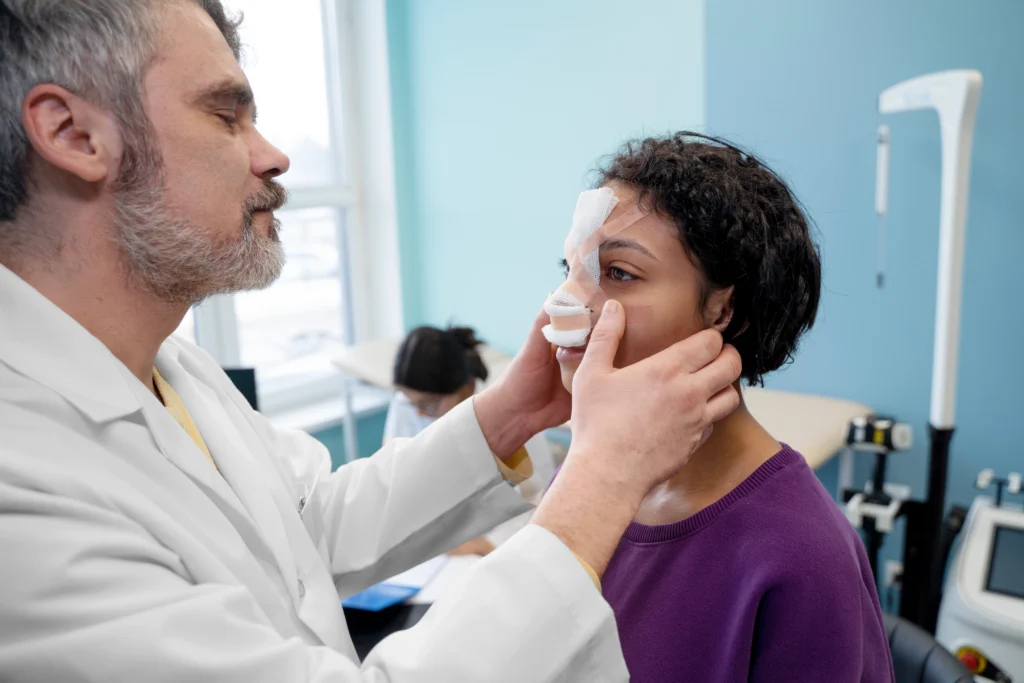
Most procedures are done under general anaesthesia. After surgery, patients are watched for a few hours. Most go home the same day. Extra watching is only needed in some cases.
In the first 24 to 48 hours, patients often experience:
- Swelling around the nose and eyes.
- Mild bruising.
- Nasal blockage.
- Light bleeding or discharge.
- Facial tightness.
- Pressure around the nose and cheeks.
Severe pain is uncommon. Most patients describe it as pressure or heaviness. It feels like bad sinus pressure.
A splint is placed on the outside of the nose. It protects the nose and reduces movement. Some patients also have internal splints or soft packing. This depends on the surgery.
According to the NIH, swelling and bruising are expected early on. They slowly improve as the tissues heal.
Rhinoplasty Recovery During the First Week
The first week is the most noticeable stage. In fact, bruising and swelling are often at their worst.
During this stage, surgeons typically advise patients to:
- Keep the head raised while resting.
- Avoid bending forward.
- Take medications exactly as prescribed.
- Avoid blowing the nose.
- Stay hydrated.
- Limit physical activity.
- Use cold compresses around the eyes carefully.
Breathing may feel hard at first. This is because swelling narrows the airways for a short time.
Many patients feel worried during this stage. The face can look very swollen. However, these changes are short-term and normal.
By the end of the first week, patients return for splint removal. Swelling is still visible. But many feel relieved once the cast comes off.
Most patients return to desk work within 7 to 10 days. However, this depends on the surgery and healing speed.
Rhinoplasty Recovery During Weeks 2 to 4
During weeks two to four, patients watch their nose closely. As a result, this stage can feel tough.
Most bruising improves during this time. However, swelling can still come and go. For example, the nose may look puffier in the morning or after a salty meal
During this stage:
- Most bruising fades.
- Breathing becomes easier.
- Patients return to light social activities.
- Swelling slowly improves.
- The tip may still look larger than expected.
Patients often feel better by this point. However, exercise may still not be allowed.
How Long Does Swelling Last During Rhinoplasty Recovery?
In fact, swelling is the longest part of recovery.
Patients with thicker skin may swell for longer. Fluid takes more time to leave the tissues.
Several things affect how long swelling lasts, including:
- Skin thickness.
- Surgical complexity.
- Whether it is a first or revision surgery.
- Smoking habits.
- Overall health.
- How well you follow aftercare advice.
Minor changes in swelling are normal. For example, puffiness may happen after exercise, stress, or salty meals.
Research shows healing can continue for many months. So the final nose shape takes time to show.
What Can Patients Expect Between Months 1 and 3?
By one month, most patients feel ready for normal life. However, the nose is still healing inside.
Between months one and three:
- Swelling continues to improve.
- The shape of the nose becomes clearer.
- Scar tissue starts to soften.
- Facial balance improves.
- Breathing often becomes easier.
Many patients worry their nose still looks large. In most cases, swelling is why. So surgeons advise not to judge results too early.
The American Society of Plastic Surgeons says recovery needs patience. Results come slowly, not right away.
When Are Final Rhinoplasty Recovery Results Visible?
Overall, final results take 12 to 18 months to settle.
- The upper bridge heals faster than the tip. The tip has thicker tissue. So it takes longer to settle.
- Avoid judging results too early. Uneven swelling and stiffness are common.
- Even when swelling looks gone, healing may still continue inside.
Most surgeons advise focusing on slow improvement. Do not expect perfect results straight away.
Rhinoplasty Recovery Tips for Better Healing
Sleep With Your Head Elevated
Raising the head while sleeping also helps reduce swelling early on.
Sleep on your back. Also, avoid sleeping on your side for several weeks.
Avoid Smoking and Alcohol
Smoking reduces blood flow and can therefore slow healing.
Alcohol can also worsen swelling and cause fluid loss during recovery.
The CDC says smoking affects healing and blood flow. This can lead to more problems after surgery.
Protect the Nose From Injury
The nose remains delicate for several weeks after surgery. So take care to protect it.
Patients should avoid:
- Contact sports.
- Crowded environments.
- Accidental facial pressure.
- Heavy glasses are restricted by the surgeon.
Even minor bumps can therefore slow healing in the early stages.
Maintain Healthy Nutrition
Healthy food also helps the body heal and recover.
Many surgeons recommend:
- Protein-rich foods.
- Fresh fruits and vegetables.
- Sufficient hydration.
- Reduced sodium intake.
High-salt meals may also worsen swelling for a short time.
Attend Follow-Up Appointments
Regular follow-up visits also help your surgeon spot any concerns early.
Avoid comparing your healing to social media timelines. After all, every recovery is different.
Which Symptoms Should Not Be Ignored?
Some swelling and discomfort are normal. However, some symptoms need urgent attention.
Patients should contact their surgeon if they experience:
- Persistent heavy bleeding.
- Severe worsening pain.
- Fever.
- Sudden swelling increase.
- Difficulty breathing.
- Signs of infection.
- Foul-smelling discharge.
Getting checked early can therefore prevent more serious problems.
According to the NIH, treating problems early helps protect long-term results.
Why Are Realistic Expectations Important During Rhinoplasty Recovery?
Realistic expectations are key to a good outcome.
Healing takes time. As a result, it is normal to feel up and down during recovery. Many patients feel anxious during the swelling phase. Results take time to show.
This surgery can improve facial balance and nose structure. But it cannot create perfection. It will not fully change your natural features.
Patients looking at rhinoplasty cost in Bangalore should also carefully check:
- Surgeon qualifications.
- Experience with similar cases.
- Communication style.
- Safety standards.
- Recovery support.
- Follow-up care availability.
Choosing on price alone may mean missing key aspects of quality and safety. So think carefully before deciding.
Research shows satisfaction is linked to realistic expectations. Clear talks before surgery also matter.
Does Rhinoplasty Recovery Differ Between Cosmetic and Functional Rhinoplasty?
Recovery can vary based on the type of surgery.
Patients having surgery to fix breathing may feel blocked at first. Airflow gets better slowly over time.
Revision rhinoplasty patients may experience:
- Swelling that lasts longer.
- Increased scar tissue.
- Slower tissue settling.
- Longer healing times.
Complex procedures need more patience. Healing is often slower than with a first surgery.
Good results need both the surgery and the recovery to go well. At Facetalks, we explain each step. That way, you feel confident and make a good choice.
Rhinoplasty Recovery: Key Takeaways
Most patients get back to daily life within a few weeks. But full healing takes much longer than many expect.
Swelling, mood swings, and gradual changes are all normal. Healthy habits and regular follow-ups also support better long-term results.
Patients should look beyond rhinoplasty cost in Bangalore. Surgeon skill and long-term support matter just as much.
Recovery needs patience, good aftercare, and regular follow-ups. Most patients see steady improvement over time.
Planning Rhinoplasty in Bangalore?
Understanding recovery is key before having this surgery. Speak with a qualified surgeon. Get your questions answered. Set realistic expectations before you go ahead.
To book a consultation for rhinoplasty in Bangalore, call us at 84319-91306 or 78925-91862, or email info@facetalks.in or facetalks321@gmail.com.
Address: 1st Floor, 228, 100 Feet Rd, HRBR Layout 1st Block, HRBR Layout, Kalyan Nagar, Bengaluru, Karnataka 560043
Frequently Asked Questions About Rhinoplasty Recovery
- When can I wash my face after rhinoplasty?
Most patients can clean their face within a few days. However, avoid pressure on the nose. Your surgeon will give you clear instructions.
- When can I exercise again?
Light walking is encouraged early to help blood flow. However, intense exercise and heavy lifting are not allowed for several weeks.
- Is uneven swelling normal after rhinoplasty?
Yes. Uneven swelling is common. It usually gets better slowly as tissues heal over time.
- Can rhinoplasty scars remain visible?
Closed surgery leaves no visible scar. Open surgery may leave a small scar under the nose. It usually fades over time.
- How long does the nasal tip stay swollen?
The tip stays swollen longer than the upper bridge. In some patients, this improves for up to a year.
References:
- https://www.ncbi.nlm.nih.gov/books/NBK558970/
- https://pmc.ncbi.nlm.nih.gov/articles/PMC5890372/
- https://pmc.ncbi.nlm.nih.gov/articles/PMC3709529/
- https://www.plasticsurgery.org/cosmetic-procedures/rhinoplasty/recovery
- https://www.cdc.gov/tobacco/campaign/tips/diseases/cancer.html
- https://pmc.ncbi.nlm.nih.gov/articles/PMC3199839/
- https://pmc.ncbi.nlm.nih.gov/articles/PMC7677125/