
Deviated Septum: Causes, Symptoms & Surgical Fix
One-sided nasal blockage, mouth breathing, and noisy sleep are common complaints. Many people blame allergies or sinus issues. However, a deviated septum may be the real cause.
A deviated septum is common. But when the bend is severe, it can cause breathing problems, nasal blockage, nosebleeds, poor sleep, and repeated sinus issues. This guide covers deviated septum symptoms, diagnosis, and treatment. It also explains septoplasty and functional rhinoplasty. It helps readers in Bangalore know when to see the best rhinoplasty surgeon in HRBR Layout for combined functional and structural concerns.
TL;DR
- A deviated septum is a bent wall inside the nose. It can cause one-sided nasal blockage, breathing problems, repeated sinus issues, nosebleeds, snoring, and poor sleep.
- Mild cases often improve with sprays, saline rinses, and allergy control. But these only reduce swelling. They do not straighten the septum itself.
- When symptoms persist or badly affect daily life, septoplasty can reposition the septum. It is sometimes combined with functional rhinoplasty. It is usually a low-risk, day-care ENT procedure.
- Recovery usually involves a week of congestion and mild discomfort. Breathing improves slowly over several weeks. Small risks include bleeding, infection, or the need for revision.
- In Bangalore, especially around HRBR Layout, choose an experienced ENT or the best rhinoplasty surgeon. This helps ensure accurate diagnosis and safe outcomes. It also helps with treatment planning.
Struggling to Breathe Through Your Nose and Not Sure Why?
What Is a Deviated Septum?
The Role of the Nasal Septum in Deviated Septum Breathing Problems
The nasal septum is a wall of cartilage and bone. It separates the two nasal passages. When the septum sits near the center of the nose, airflow stays balanced between both nostrils.
When Does The Septum Become “Deviated”?
A deviated septum occurs when the septum bends to one side. As a result, one nasal passage becomes narrower. Mild deviation is very common. It may cause no symptoms at all.
But a more severe bend can reduce airflow. It can also block normal sinus drainage. Some people only have an internal deviation. Others also notice a visibly crooked nose.
What Causes a Deviated Septum?
1. Present From Birth
Some people are born with a septum that grew off-center. It may have shifted during birth too. These cases may not show up until later in life.
2. How Injury Can Cause a Deviated Septum
A deviated septum can also happen after injury. This includes sports trauma, falls, or road accidents. A hard blow to the face is another common cause. Even a nose injury from years earlier may leave lasting blockage.
3. Aging and Ongoing Inflammation
Age-related changes and long-term swelling from allergies or sinus conditions can make symptoms feel worse over time.
What Symptoms Does a Deviated Septum Cause?
1. Persistent Nasal Blockage and Breathing Difficulty
The most common symptom is blockage in one or both nostrils. It is often worse on one side. Many patients feel that one side stays blocked. This often gets worse during colds or allergy flare-ups.
2. Recurrent Sinus Problems, Pressure, and Nosebleeds
Altered airflow from a deviated septum may cause sinus congestion and facial pressure. It may also lead to repeat sinus infections. The nasal lining may also dry out. This can increase the risk of crusting and nosebleeds.
3. Snoring, Poor Sleep, and Fatigue
Narrowed nasal passages may also cause snoring, noisy breathing, and poor sleep. Some people notice they sleep better in positions that make breathing easier at night.
How Can a Deviated Septum Affect Your Quality of Life?
Chronic nasal obstruction affects more than just breathing. It can make exercise harder. It may also cause mouth breathing, dry mouth, and throat irritation. This is especially true in air-conditioned spaces. So long-term blockage can lead to repeated sinusitis. It can also cause sleep problems.
Not every deviated septum needs surgery. But symptoms that keep returning or affect daily comfort deserve a medical check.
How Is a Deviated Septum Diagnosed?
1. Medical History for Diagnosing a Deviated Septum
The check usually begins with questions about nasal blockage, past nose injuries, allergies, sinus infections, snoring, and sleep quality.
2. Nose Exam and Nasal Endoscopy
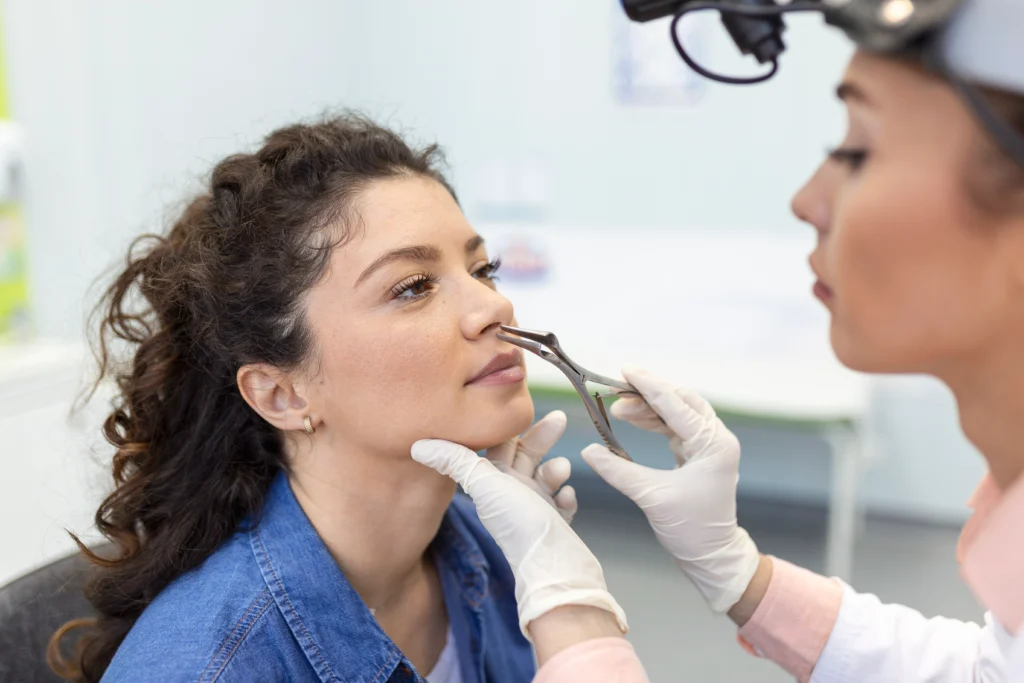
An ENT specialist may examine the inside of the nose using a light and a speculum. Sometimes, they use nasal endoscopy. This helps them look more closely at the septum and nearby structures.
3. When Are Scans Needed?
CT scans may be needed for some patients. These include those with chronic sinus infections, past nasal surgery, or suspected sinus disease.
Can a Deviated Septum Be Managed Without Surgery?
1. Medications That Reduce Swelling And Congestion
In mild cases, treatment may begin with non-surgical approaches such as:
- Saline washes
- Steroid nasal sprays
- Antihistamines
- Decongestants
These can reduce swelling and relieve congestion. But they cannot straighten the septum itself.
2. Lifestyle And Home Care Strategies
Other simple steps include using a humidifier and avoiding smoke and irritants. Managing allergies also helps. These can also improve daily breathing comfort.
3. When Medical Treatment Is Enough
If symptoms are mild and respond well to medicines and home care, surgery may not be needed. Many patients do well with monitoring alone. Symptom control can be enough.
We first identify the cause of your blocked nose before recommending treatment. During your visit at Facetalks, we review your symptoms and examine your nose. We then check the cause of your breathing problems. It may be a deviated septum, allergies, sinus issues, or a mix. This allows us to recommend the right treatment for your needs
When Does a Deviated Septum Need Surgery?
Signs That a Deviated Septum May Need Surgery
Surgery may be needed when medicines no longer give enough relief. It may also be needed when nasal blockage badly affects daily life.
Signs include ongoing blockage, frequent sinusitis, bad nosebleeds, and major sleep problems
Discussion With Your OMFS Or Nose Surgery Specialist
The decision is based on symptoms and nose structure. It also depends on how much the condition affects daily life.
Some patients in Bangalore have both breathing issues and a crooked nose. In such cases, the best rhinoplasty surgeon in HRBR Layout can create a detailed surgical plan.
Septoplasty vs Rhinoplasty: Which Fixes a Deviated Septum?
1. What Septoplasty Does?
Surgeons use septoplasty to straighten a deviated septum. They perform it to improve airflow and breathing, not looks.
2. When Functional Rhinoplasty Is Added?
Sometimes, a nose injury changes the shape of the nose. It may also weaken its structure. In such cases, the surgeon may add functional rhinoplasty to the septoplasty. This is different from cosmetic rhinoplasty. The main concern here is nasal function, not looks.
3. Choosing The Right Approach
Some people need only a septoplasty. Others may benefit more from a combined nasal correction procedure.
How Does Deviated Septum Surgery Work?
1. Step-by-Step Overview of Deviated Septum Surgery
Surgeons perform septoplasty under anesthesia. They make small cuts inside the nose. Then, they lift the septal lining. They fix the bent areas next. Finally, they straighten the septum. Most patients go home the same day.
2. When Other Procedures Are Combined
In some patients, septoplasty may be done along with other procedures. These include turbinate reduction, sinus surgery, or functional rhinoplasty. This happens when more than one issue is causing the blockage.
What Is the Recovery Timeline After Deviated Septum Surgery?
1. First Few Days After Surgery
It is normal to have a stuffy nose, mild pressure, and some bloody discharge in the first few days. Patients are usually told to rest and keep their heads raised. They should also avoid blowing their nose and follow medicine instructions carefully.
2. Returning To Work And Routine
Most patients can return to office work within about a week. However, heavy lifting and hard activity should be avoided for at least one to two weeks.
3. Long-Term Breathing Improvement
Breathing will often improve slowly as swelling goes down. This usually happens over the next few weeks. Follow-up visits let the surgeon check on healing and any problems.

What Are the Risks of Deviated Septum Surgery?
1. Potential risks and complications
Septoplasty is generally safe. However, some patients may have bleeding or infection. Others may have ongoing blockage or a hole in the septum. Some may also notice changes in nose shape. In some cases, revision surgery may be needed.
2. What Results Can You Reasonably Expect?
Many patients notice better breathing after recovery. But surgery may not fully clear all symptoms. This is true for patients who also have allergies, chronic sinus disease, or other conditions.
How Do You Choose a Surgeon for Deviated Septum Treatment in Bangalore?
Patients should look for a specialist with solid experience in septoplasty and nasal correction. So experience matters in diagnosis and surgical planning. It also matters in post-op care.
When Should You Seek Treatment for a Deviated Septum?
A deviated septum is common. But persistent nasal blockage and breathing problems should not be ignored. Repeat sinus trouble and poor sleep are also signs to act on. Medicines can help control swelling. Yet septoplasty is the main procedure used to fix the structural problem.
If you are in Bangalore and dealing with ongoing nasal blockage, an expert check is the next sensible step. A qualified OMFS or the best rhinoplasty surgeon in HRBR Layout can assess your symptoms and examine your nose. They can then help you decide whether medicine or surgery is the right path to easier breathing.
Breathe Easier: Deviated Septum Treatment with Expert Care
Do you struggle with breathing problems, sinus issues, or one-sided nasal blockage? A proper check can identify the cause. It can also help you find the right treatment.
To book a consultation for deviated septum treatment in Bangalore, call us at 84319-91306 or 78925-91862, or email info@facetalks.in or facetalks321@gmail.com.
Schedule your consultation today and connect with a specialist
Address: 1st Floor, 228, 100 Feet Rd, HRBR Layout 1st Block, HRBR Layout, Kalyan Nagar, Bengaluru, Karnataka 560043
FAQs About Deviated Septum Treatment and Septoplasty
- Can a deviated septum worsen over time?
Yes, symptoms may intensify with age and when allergies or infections increase swelling inside the nose.
- Will septoplasty change the appearance of my nose?
Usually not significantly. Septoplasty primarily aims to improve breathing rather than alter looks.
- Is septoplasty painful?
Most patients report more congestion and pressure than severe pain. Recovery is typically manageable with prescribed medications.
- Can a deviated septum return after surgery?
The same deviation usually does not grow back, but some patients may experience residual blockage or require revision surgery later.
References
- https://pubmed.ncbi.nlm.nih.gov/36514566/
- https://pubmed.ncbi.nlm.nih.gov/31227374/
- https://pubmed.ncbi.nlm.nih.gov/38477237/
- https://www.ncbi.nlm.nih.gov/books/NBK567718/
- https://pubmed.ncbi.nlm.nih.gov/21332671/
- https://www.sciencedirect.com/science/article/pii/S019607092300025X