Corrective Jaw Surgery in Bangalore: A Complete Guide
Corrective jaw surgery in Bangalore has become an important treatment option for misaligned jaws. Also known as orthognathic surgery, this procedure helps reposition the jaws to improve both function and facial balance.
Jaw alignment problems can affect far more than appearance alone. Many people experience difficulty chewing, jaw discomfort, speech issues, breathing problems, or uneven facial proportions due to misaligned upper and lower jaws. In some cases, orthodontic treatment alone may not fully correct the issue because the underlying problem involves the jaw bones rather than just the teeth.
TL;DR
- Corrective jaw surgery in Bangalore is performed to correct jaw misalignment, bite problems, facial imbalance, and certain breathing-related issues.
- The procedure may improve chewing, speech, jaw function, facial proportions, and overall quality of life.
- Jaw surgery is commonly recommended when braces alone cannot fix structural jaw problems.
- Treatment usually involves orthodontic preparation, surgery, and postoperative orthodontic care.
- Recovery can take several weeks for visible healing, while complete bone healing may continue for several months.
- Procedure costs vary depending on surgical complexity, hospital infrastructure, orthodontic treatment, and surgeon expertise.
- Choosing an experienced oral and maxillofacial surgeon, along with proper planning and realistic treatment goals, is important for long-term outcomes.
Introduction
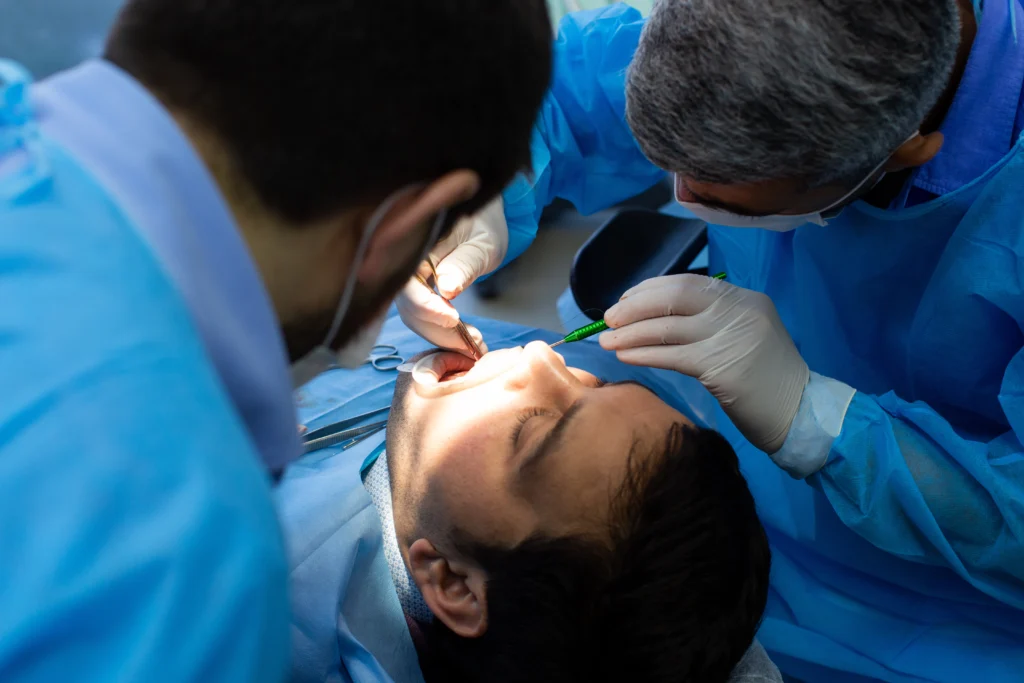
Patients considering jaw correction surgery often have many questions. They want to understand whether surgery is truly necessary, how the procedure works, how painful recovery may be, how long treatment takes, and what kind of results are realistically possible. Since jaw surgery is a major medical decision, having clear and trustworthy information is extremely important.
This guide explains corrective jaw surgery in simple English while covering every important aspect of the treatment process, including procedure types, recovery, risks, benefits, cost factors, orthodontic preparation, sleep apnea correction, and how to choose the right surgeon in Bangalore.
What Is Corrective Jaw Surgery?
Corrective jaw surgery, also called orthognathic surgery, is a procedure used to reposition the upper and lower jaws, the chin, or both when they are not properly aligned.
Unlike cosmetic dental procedures that primarily focus on teeth, jaw surgery addresses the facial skeleton. The surgery is usually performed by an oral and maxillofacial surgeon in coordination with an orthodontist.
Corrective jaw surgery in Bangalore may help improve:
- Bite alignment
- Facial balance
- Jaw function
- Speech clarity
- Breathing problems
- Chewing ability
- Sleep-related airway obstruction
- Chronic jaw discomfort
Modern orthognathic surgery focuses on both function and facial harmony rather than simply changing appearance.
According to the American Association of Oral and Maxillofacial Surgeons, corrective jaw surgery can improve both functional problems and facial skeletal balance in patients with jaw irregularities.
Why Do Some People Need Corrective Jaw Surgery in Bangalore?
Some jaw alignment issues are mild and can be corrected using braces or aligners alone. However, when the jaw bones are misaligned, orthodontic treatment may not fully resolve the problem.
This can happen because of:
- Genetics
- Abnormal jaw growth
- Birth-related skeletal conditions
- Facial trauma
- Developmental abnormalities
- Childhood breathing patterns
- Certain medical conditions
Many patients seeking corrective jaw surgery in Bangalore initially seek treatment for practical daily difficulties rather than cosmetic concerns.
Common Signs That May Indicate Jaw Misalignment
Jaw problems can appear differently from person to person.
Some common symptoms include:
- Difficulty Chewing Food: Poor bite alignment may make it difficult to chew properly or comfortably.
- Chronic Jaw Pain: Jaw joints and surrounding muscles may become strained due to improper bite pressure.
- Frequent Headaches: Some patients experience headaches caused by jaw muscle tension.
- Speech Difficulties: Jaw position can affect pronunciation and speech clarity.
- Mouth Breathing: Certain jaw structures may contribute to breathing difficulties.
- Facial Imbalance: Uneven jaw growth may create visible facial asymmetry.
- Underbite or Overbite: Severe bite irregularities are among the most common reasons for surgery.
- Sleep Problems: In some cases, jaw position may contribute to obstructive sleep apnea.
What Conditions Can Corrective Jaw Surgery Treat?
Corrective jaw surgery can address several skeletal and functional conditions.
1. Underbite
An underbite occurs when the lower jaw extends too far forward.
Possible problems include:
- Speech issues
- Chewing difficulty
- Facial imbalance
- Tooth wear
2. Overbite
A severe overbite occurs when the upper jaw protrudes excessively over the lower jaw.
This may affect:
- Lip closure
- Facial proportions
- Jaw function
3. Open Bite
An open bite happens when the upper and lower teeth do not meet properly while the mouth is closed.
This can interfere with:
- Eating
- Speech
- Tongue posture
4. Crossbite
A crossbite occurs when the upper teeth sit inside the lower teeth rather than outside.
5. Facial Asymmetry
Uneven jaw development can create a noticeable imbalance in facial structure.
6. Obstructive Sleep Apnea
Certain jaw advancement procedures may help enlarge the airway in selected patients.
Studies have shown that maxillomandibular advancement surgery can improve airway obstruction in carefully selected patients with sleep apnea.
Who Is a Good Candidate for Corrective Jaw Surgery in Bangalore?
Not everyone with bite issues requires surgery. A proper consultation helps determine whether jaw surgery is medically appropriate.
Good candidates often include people who:
- Have severe bite misalignment.
- Cannot achieve correction through braces alone.
- Experience jaw-related functional problems.
- Have completed jaw growth.
- Are you physically healthy enough for surgery?
- Have realistic expectations.
Most surgeons prefer to wait until facial growth is complete before surgery.
This generally occurs around:
- 16–18 years in females.
- 18–21 years in males.
Patients considering corrective jaw surgery in Bangalore usually undergo a detailed evaluation before treatment planning begins.
What Types of Corrective Jaw Surgery Are Performed?
The exact surgical approach depends on the patient’s jaw structure and treatment goals.
1. Upper Jaw Surgery (Maxillary Osteotomy)
This procedure repositions the upper jaw.
It may help treat:
- Open bite
- Midface imbalance
- Severe overbite
- Crossbite
2. Lower Jaw Surgery (Mandibular Osteotomy)
This surgery repositions the lower jaw forward or backwards.
It is commonly performed for:
- Underbite correction.
- Receding lower jaw.
- Bite alignment problems.
3. Double Jaw Surgery
Some patients require surgery on both the upper and lower jaws simultaneously.
This may provide:
- Better facial balance
- Improved airway space
- More accurate bite correction
4. Chin Surgery (Genioplasty)
Chin reshaping procedures are sometimes combined with jaw surgery to improve facial proportions.
How Does the Treatment Process Work?
Patients often underestimate how detailed the treatment journey can be.
Corrective jaw surgery in Bangalore is usually completed in multiple stages.
Step 1: Initial Consultation and Evaluation
The first stage involves detailed examination and treatment planning.
The surgeon and orthodontist evaluate:
- Facial structure
- Bite relationship
- Jaw movement
- Dental alignment
- Airway anatomy
Investigations may include:
- X-rays
- 3D CT scans
- Dental impressions
- Facial photographs
- Bite analysis
Digital planning technologies are now commonly used to improve surgical precision.
Step 2: Orthodontic Preparation
- Most patients require braces before surgery.
- This phase helps align the teeth so the jaws fit together properly after surgery.
- Pre-surgical orthodontic treatment may take 12–18 months in many cases.
- Interestingly, the bite may temporarily appear worse during this stage because the orthodontist is preparing the teeth for surgical repositioning.
Patients researching corrective jaw surgery in Bangalore are often surprised by how important orthodontic planning is for successful results.
Step 3: The Surgery
- The procedure is usually performed under general anaesthesia in a hospital setting.
- Depending on complexity, surgery may take around 2–6 hours.
- Modern techniques generally involve incisions inside the mouth, which reduces visible external scarring.
- The surgeon carefully cuts and repositions the jawbones according to the treatment plan. Titanium plates and screws are typically used to stabilise the new jaw position.
Computer-assisted planning and 3D surgical simulation have improved the precision and predictability of orthognathic surgery.
Step 4: Recovery and Healing
Initial recovery occurs over several weeks, but full healing takes longer. Patients usually continue orthodontic treatment after surgery to refine the final bite alignment.
Is Corrective Jaw Surgery Painful?
This is one of the biggest concerns patients have before treatment.
Most people experience:
- Swelling
- Tightness
- Mild discomfort
- Temporary numbness
- Facial stiffness
Severe pain is often less common than expected because the operated areas may remain temporarily numb during early recovery.
Pain medications and proper aftercare usually help manage discomfort effectively.
What Is Recovery Like After Corrective Jaw Surgery?
Recovery varies depending on:
- Type of surgery
- Number of jaws corrected
- Individual healing ability
- Overall health
First Week After Corrective Jaw Surgery in Bangalore
Common experiences include:
- Facial swelling
- Bruising
- Difficulty chewing
- Temporary speech changes
- Soft or liquid diet requirements
Swelling peaks typically occur within the first few days.
Weeks Two to Four
Most patients gradually return to normal daily activities.
During this phase:
- Swelling begins to improve
- Jaw movement increases
- Energy levels improve
Many patients return to desk-based work within 2–3 weeks
Long-Term Recovery
Bone healing continues for several months.
Final facial settling and complete healing may take 6 -12 months.
Following postoperative instructions carefully is extremely important during recovery.
What Can You Eat After Jaw Surgery?
Diet plays a major role in healing.
Liquid Diet Phase
Immediately after surgery, patients usually consume:
- Smoothies
- Protein shakes
- Soups
- Yoghurt drinks
- Blended meals
Soft Food Phase
As healing progresses, softer foods are introduced gradually.
Examples include:
- Mashed potatoes
- Scrambled eggs
- Soft rice
- Oatmeal
- Pasta
Hard or chewy foods are typically restricted for several weeks.
What Are the Benefits of Corrective Jaw Surgery in Bangalore?
Many patients experience improvements that extend beyond cosmetic appearance.
Functional Benefits
1. Better Chewing Ability
Patients often find eating more comfortable after bite correction.
2. Improved Speech
Correct jaw positioning may improve pronunciation in some cases.
3. Reduced Jaw Strain
Jaw joints and muscles may function more efficiently.
4. Improved Breathing
Certain procedures may enlarge the airway.
5. Better Dental Health
Proper bite alignment may reduce uneven tooth wear.
Aesthetic Benefits
Corrective jaw surgery may also improve:
- Jawline definition
- Facial symmetry
- Chin projection
- Side profile balance
Modern jaw surgery aims for natural facial harmony rather than dramatic alteration.
Psychological Benefits
Some patients report:
- Increased confidence
- Improved social comfort
- Better self-image
Research has found that many patients undergoing orthognathic surgery experience improved quality of life and psychological outcomes.
What Risks Should Patients Understand Before Surgery?
Like any major surgical procedure, corrective jaw surgery involves risks.
Possible complications may include:
- Infection
- Bleeding
- Nerve injury
- Temporary or permanent numbness
- Bite relapse
- Delayed healing
- Jaw stiffness
- Swelling
- Anaesthesia-related risks
Smoking, uncontrolled medical conditions, and poor oral hygiene may increase the risk.
A responsible surgeon should discuss risks honestly during consultation rather than promising guaranteed outcomes.
At Facetalks, treatment recommendations are based on detailed clinical evaluation rather than appearance alone. We assess your bite, jaw function, facial balance, airway health, and orthodontic requirements before recommending surgery. This helps ensure that the treatment plan addresses both functional concerns and long-term stability while supporting natural facial harmony.
How Much Does Corrective Jaw Surgery in Bangalore Cost?
The cost of corrective jaw surgery in Bangalore varies significantly depending on treatment complexity.
Factors Affecting Cost
1. Type of Jaw Surgery
Single-jaw surgery usually costs less than double-jaw surgery.
2. Orthodontic Treatment
Braces before and after surgery often add significantly to the total cost.
3. Surgeon Expertise
Experienced specialists may charge higher fees.
4. Hospital Infrastructure
Advanced surgical centres generally involve higher facility charges.
5. Diagnostic Imaging
3D scans and digital planning may affect overall expenses.
6. Hospital Stay
Longer recovery admissions may increase cost.
Patients should always request a detailed written estimate covering:
- Surgical fees
- Anesthesia
- Orthodontics
- Hospital charges
- Medications
- Follow-up visits
Does Insurance Cover Corrective Jaw Surgery in Bangalore?
Insurance coverage depends on whether the surgery is considered medically necessary.
Coverage may be more likely if surgery is required for:
- Severe bite dysfunction
- Sleep apnea
- Functional jaw disorders
- Difficulty chewing or speaking
Purely cosmetic treatment is less likely to qualify for reimbursement. Patients should confirm documentation requirements with both their hospital and insurance provider.
Can Corrective Jaw Surgery Improve Sleep Apnea?
In selected patients, yes. Certain jaw advancement procedures can enlarge the airway and improve airflow during sleep.
Research has shown significant improvement in the severity of obstructive sleep apnea after maxillomandibular advancement surgery in appropriate candidates.
However, surgery is not suitable for every patient with sleep apnea. A detailed airway evaluation is necessary before treatment planning.
Will Jaw Surgery Change Facial Appearance?
Yes, facial appearance usually changes to some extent because jaw position strongly affects facial proportions.
Possible changes may include:
- Improved jawline definition
- Better chin balance
- Enhanced facial symmetry
- Improved side profile
Most patients undergoing corrective jaw surgery in Bangalore seek balanced, natural-looking changes rather than dramatic transformations.
How Long Do Corrective Jaw Surgery Results Last?
Results are generally long-lasting once healing is complete.
Long-term stability depends on:
- Proper surgical planning
- Orthodontic care
- Bone healing quality
- Patient compliance
Natural facial ageing still continues over time, but major structural correction is typically stable.
How to Choose the Right Jaw Surgeon in Bangalore?
Choosing the right surgeon is one of the most important parts of the treatment process.
Important Factors to Consider
1. Qualifications
Look for a doctor with oral and maxillofacial surgery specialisation.
2. Surgical Experience
Experience with orthognathic procedures matters significantly.
3. Technology and Planning
Advanced imaging and digital planning can improve precision.
4. Hospital Safety Standards
Surgery should be performed in a properly equipped hospital.
5. Consultation Quality
A good consultation should include:
- Detailed evaluation
- Honest discussion of risks
- Realistic expectations
- Clear recovery guidance
Patients seeking corrective jaw surgery in Bangalore often compare multiple consultations before finalising their treatment.
Why Do Many Patients Choose Bangalore for Jaw Surgery?
Bangalore has become an important healthcare destination because of:
- Advanced hospital infrastructure.
- Access to experienced specialists.
- Modern diagnostic technologies.
- Availability of multidisciplinary care.
- Growing cosmetic and maxillofacial surgery expertise.
Patients from nearby cities frequently travel to Bangalore for consultation and treatment.
What are the Common Myths About Corrective Jaw Surgery?
Myth 1: Jaw Surgery Is Only Cosmetic
Many procedures are performed mainly for functional reasons.
Myth 2: Recovery Is Always Extremely Painful
Most patients experience swelling and tightness rather than severe pain.
Myth 3: Braces Alone Can Always Fix Jaw Problems
Severe skeletal problems often require surgery in addition to orthodontics.
Myth 4: Results Look Artificial
Modern surgical planning focuses on natural facial balance.
Questions You Should Ask During Consultation
Before proceeding with surgery, patients should ask:
- What type of surgery do I need?
- Will I need braces?
- What risks apply in my case?
- How long is the recovery?
- What results are realistic?
- Will facial appearance change significantly?
- How much swelling occurs?
- How long will treatment take overall?
Clear communication helps patients feel more informed and prepared.
What Is Life Like After Corrective Jaw Surgery?
Many patients report long-term improvements in:
- Eating comfort
- Jaw function
- Breathing
- Facial balance
- Confidence
Recovery requires patience because swelling and healing improve gradually over time.
However, for properly selected patients, corrective jaw surgery may significantly improve both function and quality of life.
Conclusion
Jaw alignment problems can affect much more than appearance alone. Difficulty chewing, speech challenges, breathing issues, facial imbalance, and chronic jaw discomfort can all impact daily life and confidence. When these problems stem from skeletal jaw irregularities rather than simple tooth alignment issues, braces alone may not provide a complete correction.
For suitable candidates, corrective jaw surgery in Bangalore can offer meaningful improvements in jaw function, facial balance, airway support, and overall quality of life. The treatment process usually involves careful orthodontic planning, detailed surgical evaluation, advanced imaging, surgery, and long-term follow-up care.
While the idea of jaw surgery may initially feel overwhelming, modern surgical techniques, digital planning systems, and multidisciplinary treatment approaches have significantly improved safety, precision, and patient outcomes.
Begin your journey to improve jaw function and achieve facial harmony.
Visit our corrective jaw surgery clinic in Bangalore to discuss your concerns and learn more about treatment options with an experienced oral and maxillofacial surgeon. Book your consultation today to receive a comprehensive assessment and a clear understanding of your treatment journey.
To book a consultation for corrective jaw surgery in Bangalore, call us at 84319-91306 or 78925-91862, or email info@facetalks.in or facetalks321@gmail.com.
Book your corrective jaw surgery consultation in Bangalore today.
Address: 1st Floor, 228, 100 Feet Rd, HRBR Layout 1st Block, HRBR Layout, Kalyan Nagar, Bengaluru, Karnataka 560043.
FAQs on Corrective Jaw Surgery in Bangalore
1. Is corrective jaw surgery in Bangalore safe?
When performed by qualified specialists in accredited hospitals, corrective jaw surgery is generally considered safe. However, all surgeries involve certain risks that should be discussed individually.
2. How long is the hospital stay after jaw surgery?
Most patients stay in the hospital for approximately 1-3 days, depending on the procedure and recovery progress.
3. Will there be visible scars?
Most surgical incisions are made inside the mouth, so visible external scars are usually minimal or absent.
4. How long does swelling last after jaw surgery?
Visible swelling often improves significantly within several weeks, although subtle swelling may continue improving for months.
5. Can adults undergo corrective jaw surgery?
Yes. Many patients undergo orthognathic surgery during adulthood after facial growth is complete.
6. Can corrective jaw surgery help with speech problems?
Certain speech difficulties related to jaw position or severe bite discrepancies may improve after surgical correction, depending on the underlying cause.
7. When can I start exercising after jaw surgery?
Light walking is usually encouraged early during recovery, but strenuous exercise and contact sports are typically restricted for several weeks or until your surgeon advises otherwise.
References: